

Emergent Agentic Systems
Ambient and Physical AI
Autonomous Intelligence
6G Architecture
AI Infrastructure
DeepTech
Quantum Computing
Space NTN Communications
AI Trust & Security
Inference Engineering
Human-Machine Cognition
When AI agents plan, delegate, and act across extended time horizons with minimal supervision, a qualitatively new governance challenge appears — systems whose behavior arises from interaction rather than instruction, operating at speeds and scales that outpace the frameworks we have to oversee them.
Intelligence is dissolving into the physical world — embedded in surfaces, infrastructure, and environments — creating a layer of continuous perception and response that operates below the threshold of human awareness and above the threshold of human control.
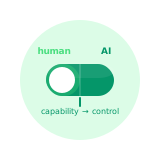
The shift from AI that augments human decisions to AI that makes them is not a matter of degree but of kind — and the organizations that understand the difference between capability and control will be the ones that capture value without creating liability.
6G is not a faster network but a fundamentally different one — AI-native, distributed, and designed to carry intelligence rather than just data, making it the connective tissue through which every other convergence on this program becomes operationally possible.
The compute, memory, and silicon decisions being made right now are not infrastructure choices — they are strategic bets on which organizations will have the capacity to participate in the AI economy at scale, and which will spend the next decade dependent on those that do.


When AI accelerates discovery in synthetic biology, materials science, and energy — designing proteins, engineering novel compounds, simulating molecular behavior — it creates a recursive loop in which breakthroughs continuously expand the frontier of what AI itself can do next.
Quantum presents a dual horizon: a near-term instrument for optimization and simulation already reshaping drug discovery, logistics, and financial modelling — and a longer-range cryptographic threat quietly invalidating the security assumptions underneath every digital system currently in production.


Low-Earth orbit constellations and non-terrestrial network integration with 6G are not simply closing the digital divide — they are redrawing the map of sovereign connectivity and creating new competitive dynamics in defense, enterprise resilience, and the geopolitics of who controls the infrastructure of intelligence.
Governing systems whose capabilities are emergent and not fully predictable demands new frameworks for explainability, liability, and oversight — while the convergence of AI and quantum computing simultaneously introduces threat surfaces that existing security architectures were never designed to withstand.
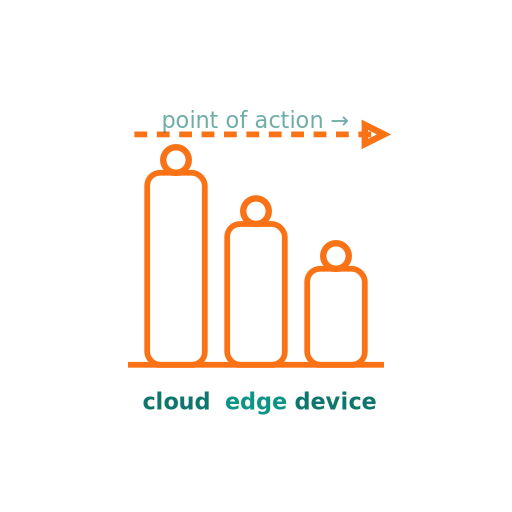
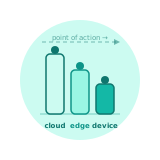
Moving intelligence from centralized cloud to the point of action — on devices, at the network edge, in real time — changes not just the economics and latency of AI deployment but the sovereignty calculus of every organization that depends on it.
As robots, co-pilots, and cognitive systems work alongside humans in physical and intellectual tasks, the design of the interface between human intent and machine capability becomes the defining engineering and ethical question for any organization with a footprint in the real world.